Astronautics has existed as an engineering discipline for little more than a century, and almost everything done today rests on a dozen steps. This is not a complete chronology but the milestones that set how things are done, and the technical lesson each one left behind. The other topics explain those lessons in detail; this page is the map.
From theory to the first liquid-fueled rocket (1903-1930)
The idea that an orbit is a perpetual fall belongs to Newton: his cannon-on-a-mountain thought experiment (published posthumously in 1728) already contains orbital velocity.
Game
Newton’s cannon
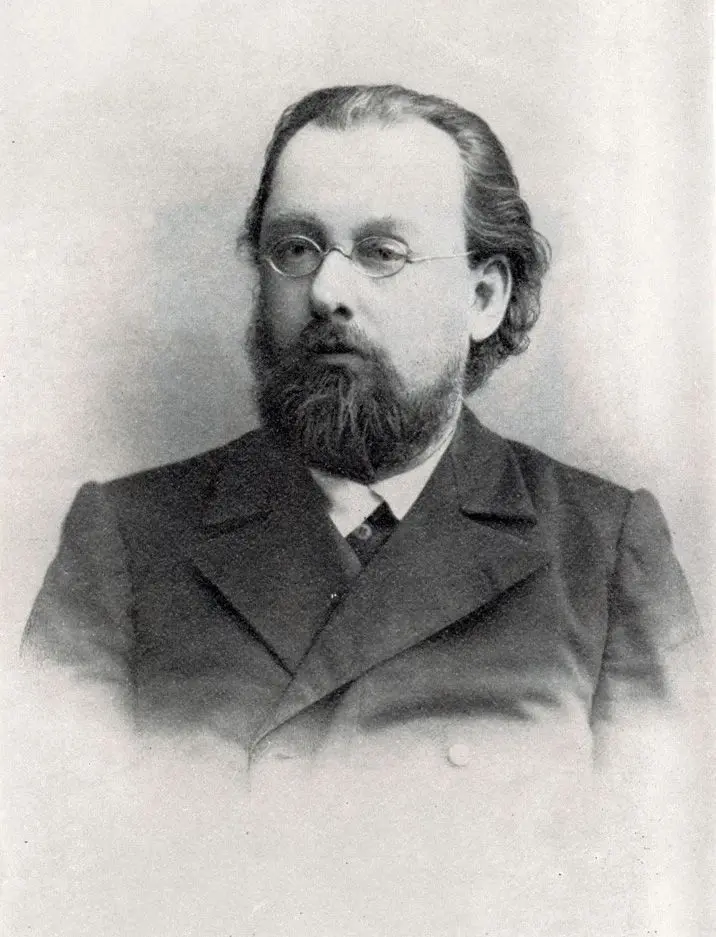
What was missing was a way to reach it. Konstantin Tsiolkovsky, a schoolteacher in Kaluga, published the rocket equation in 1903, Δv = vₑ · ln(m₀/m₁), and derived from it almost everything essential: that gunpowder is not enough, that liquid hydrogen and liquid oxygen are the best combination, that staging is needed ("rocket trains") and that a rocket works best in vacuum. Hermann Oberth independently reached similar conclusions in Die Rakete zu den Planetenräumen (1923), which influenced a whole generation of German engineers, and so did Robert Goddard in A Method of Reaching Extreme Altitudes (1919).
Lesson: the problem is mass ratio, not power. The rocket equation is explained in how a rocket works.
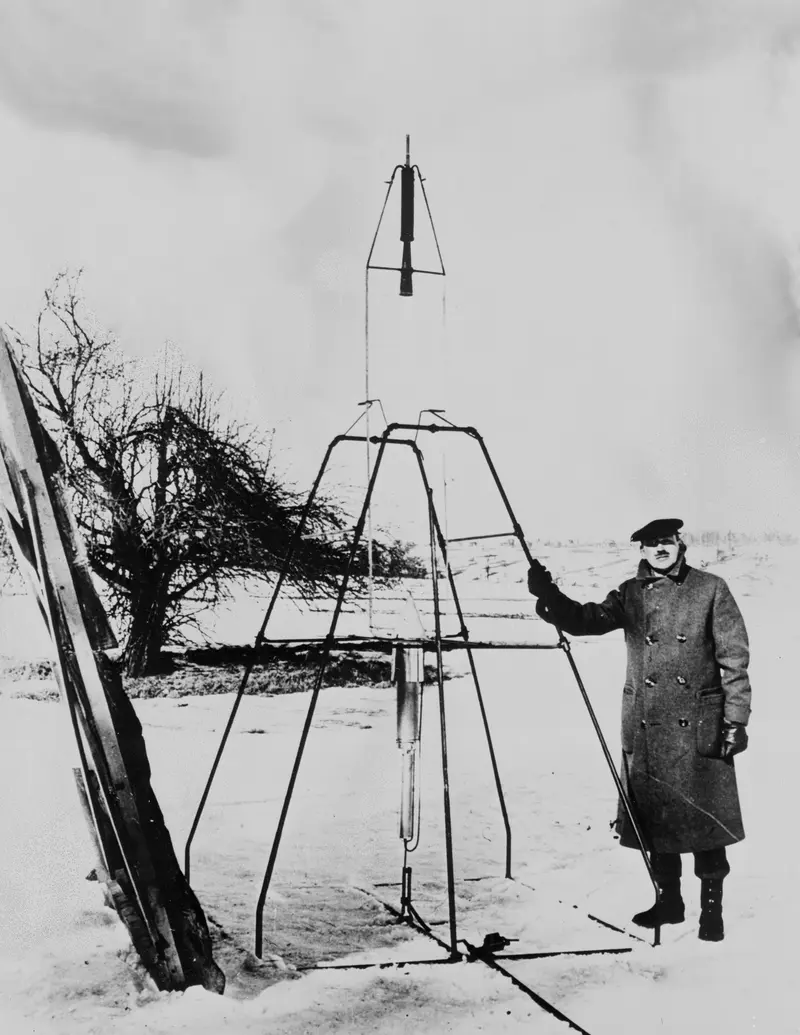
On 16 March 1926, in Auburn, Massachusetts, Goddard launched the first liquid-propellant rocket: gasoline and liquid oxygen, 2.5 seconds of flight, about 12 m of altitude. He went on to introduce gyroscopes for guidance, cooled nozzles, jet vanes and turbopumps into his designs.
Lesson: liquids allow throttling, shutdown and restart, and give higher Isp than solids; in exchange they demand pumps, valves and cooling. This is the architecture of almost every modern launch vehicle.
The V-2 and industrial scale (1942-1945)
The German V-2 (A-4) was the first ballistic missile and the first object to reach space: a test flight exceeded 170 km in June 1944. Ethanol-water and liquid oxygen, a turbopump driven by hydrogen peroxide, on the order of 25 tonnes of thrust, inertial guidance. It was built with forced labor under atrocious conditions: more people died building it than were killed by its impacts. After the war, its engineers and hardware fed the programs of the United States and the Soviet Union.
Lesson: a large rocket is a problem of manufacturing, combustion stability and guidance, not just of physics.
Epic moment · July 21, 1969
The First Step on the Moon
This ghostly black-and-white image came live from the Moon: a television camera mounted on the side of the lunar module shows Neil Armstrong climbing down the ladder and setting foot on the lunar surface. He then said: "That's one small step for man, one giant leap for mankind." In Spain it was 3:56 in the morning, and some 600 million people were watching at the same time, the largest audience in history up to then.
Watch the full moment, with soundNASA (restauración de 2009) · Public domainSputnik and the first satellite (1957-1958)
On 4 October 1957 the USSR placed Sputnik 1 in orbit, an 83.6 kg sphere with two radio transmitters, on an R-7 designed by Sergei Korolev's team. The R-7, the first intercontinental missile, used four strap-on boosters in parallel with the core stage, all ignited on the ground: a way of avoiding what was then the risky business of igniting engines at altitude. Its descendant, Soyuz, still flies.
In January 1958 the American Explorer 1 carried a Geiger counter that discovered the Van Allen radiation belts (see what is space).
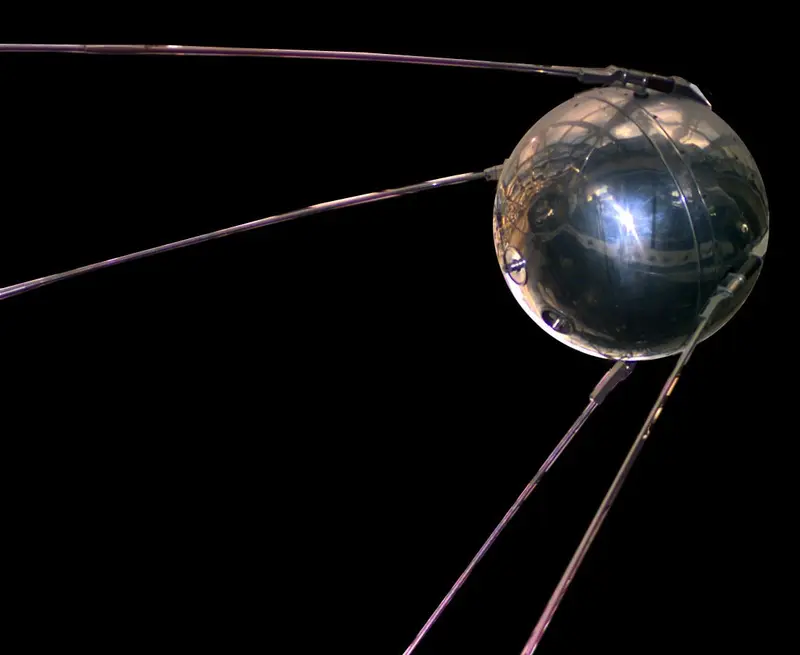
Lesson: tracking the orbits of the first satellites yielded the density of the thermosphere and the true shape of the Earth (the J2 oblateness term, see gravity and orbits). Satellites were scientific instruments from day one.
Gagarin and the first crewed flights (1961-1966)
On 12 April 1961 Yuri Gagarin circled the Earth in 108 minutes aboard Vostok 1. The capsule was a sphere: with an offset center of mass it oriented itself during ballistic reentry, with no need for attitude control, at the cost of about 8-9 g. In 1965 Alexei Leonov made the first spacewalk and almost failed to get back inside because his suit ballooned in vacuum: he had to bleed down the suit pressure by hand.
The Gemini program (1965-1966) solved what would be needed for the Moon: orbital rendezvous (Gemini 6A and 7), the first docking (Gemini 8), productive spacewalks and flights of up to two weeks.
Lesson: lifting reentry, orbital rendezvous and extravehicular activity are techniques learned by flying. See getting to orbit and surviving in space.
Apollo (1961-1972)
On 20 July 1969 Apollo 11 landed in the Sea of Tranquility. By 1972, six missions had put twelve astronauts on the surface. The key decision was the lunar orbit rendezvous architecture (championed by John Houbolt against direct ascent): a light, two-stage, expendable lunar module reduced mass so much that everything fit on a single Saturn V. The Apollo 1 fire (1967), in pure oxygen at overpressure on the pad, forced a redesign of the capsule and its materials. Apollo 13 (1970) came home on a free-return trajectory after an oxygen tank exploded.
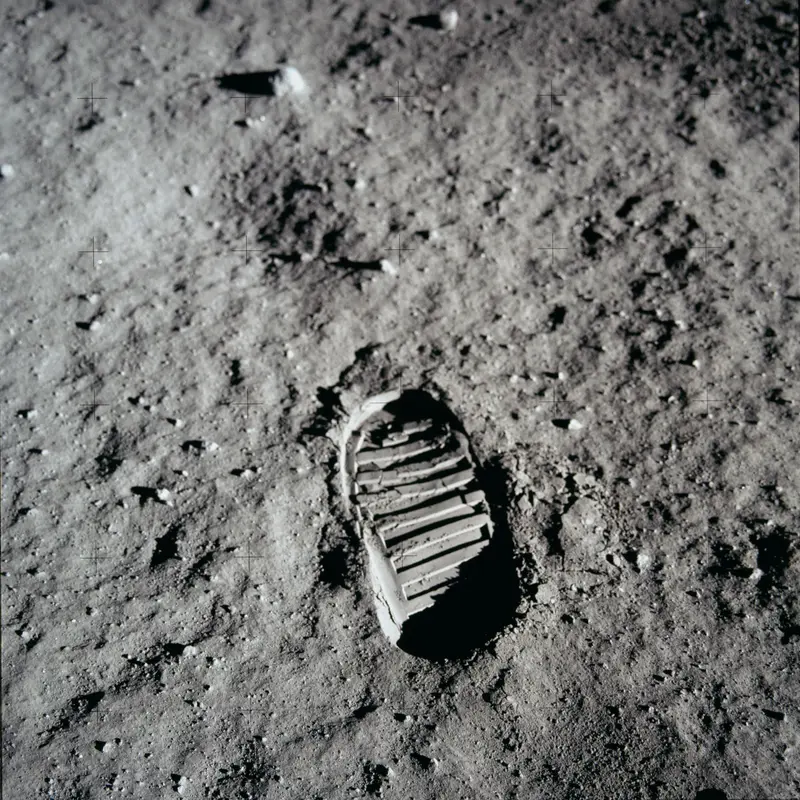
Lesson: mission architecture decides more than any engine. See traveling to the Moon.
Probes: the solar system in one generation (1959-1989)
Luna 3 photographed the far side in 1959; Mariner 4 flew past Mars in 1965; Venera 7 transmitted from the surface of Venus in 1970; the Vikings landed on Mars in 1976; the Voyagers (1977) used an exceptional planetary alignment to fly past all four giant planets with gravity assists, and Voyager 1 crossed the heliopause in 2012.
Lesson: gravity assists turn impossible trajectories into cheap ones, and autonomy and reliability over decades are design requirements.
Stations, the Space Shuttle and the Space Station (from 1971)
The Salyut stations (from 1971), Skylab (1973) and Mir (1986-2001) taught how to live for months in orbit, how to resupply with automated cargo ships (Progress) and how to repair in flight. The Space Shuttle (1981-2011, 135 missions) was the first partially reusable orbital vehicle: it deployed and serviced the Hubble Space Telescope and built much of the Station. But its reusability turned out to be expensive (refurbishing tiles and engines between flights), and two accidents killed fourteen astronauts: Challenger (1986), through the failure of a solid rocket booster O-ring on a cold morning, and Columbia (2003), through a piece of external-tank foam that punctured the wing leading edge.
Lesson: reuse only lowers cost if between-flight maintenance is minimal; and "normalized" risks (joint erosion, foam shedding seen on earlier flights) eventually take their toll. See materials for space.
The International Space Station inherited that experience. Its first module, Zarya, was launched in November 1998; the first crew arrived on 2 November 2000 and there has been someone on board ever since. It is a project of the United States, Russia, Europe, Japan and Canada, assembled in orbit over more than forty flights. China flew its first astronaut in 2003 and completed its own station, Tiangong, in 2022.
Europe and Spain
ESA was founded in 1975, with Spain among its founding members; Ariane 1 first flew in 1979 from Kourou and today Ariane 6 flies. Spain launched its first satellite, INTA's Intasat, in 1974; Pedro Duque became the first Spanish astronaut in 1998. Spanish industry today builds structures, antennas, payloads, complete satellites and launcher components.
The era of reusability (from 2015)
On 21 December 2015 a Falcon 9 first stage landed after putting a payload into orbit; in 2017 a used stage flew again, and today stages fly dozens of times. In 2020 Crew Dragon returned astronaut launches to the United States, this time on a commercial spacecraft. In 2024 the Starship launch tower caught its first stage in mid-air. Meanwhile China landed on the far side of the Moon (Chang'e 4, 2019) and brought back samples from it (Chang'e 6, 2024), the James Webb Space Telescope (launched in 2021) began observing from L2, and in 2026 the Artemis program sent four astronauts around the Moon.
Lesson: the cost of access to space was not set by physics but by architecture and launch cadence. Bringing it down has changed which missions are possible, as shown in what space is for and in the future in space.
The milestones in one table
| Year | Milestone | What it taught |
|---|---|---|
| 1903 | Tsiolkovsky's equation | Mass ratio rules; staging and hydrogen |
| 1926 | Goddard's liquid-fueled rocket | Controllable liquid propellants |
| 1944 | V-2 exceeds 100 km | Industrial scale, turbopumps, inertial guidance |
| 1957 | Sputnik 1 | First satellite; orbits as a scientific instrument |
| 1958 | Explorer 1 | Van Allen belts |
| 1961 | Gagarin | Humans can live and work in orbit |
| 1965-1966 | Gemini | Rendezvous, docking, spacewalks |
| 1969-1972 | Apollo | Lunar orbit rendezvous; twelve people on the Moon |
| 1977 | Voyager | Gravity assists, decades-long probes |
| 1981-2011 | Space Shuttle | Partial reuse: possible, but expensive |
| 2000 | Space Station inhabited | Continuous life in orbit, international cooperation |
| 2015 | Falcon 9 landing | Rapid reuse of first stages |
| 2021 | James Webb | Large deployable observatories at L2 |
| 2026 | Artemis II | Astronauts return to the lunar environment |
Key points
- Theory (Tsiolkovsky, 1903) preceded hardware capable of reaching orbit by half a century.
- From the V-2 to the R-7 and the Saturn V, the leap was in manufacturing, combustion and guidance.
- Apollo was decided by its architecture (lunar orbit rendezvous).
- The Shuttle taught that reuse only saves money if maintenance is minimal; Falcon 9 achieved it.
- The current era is defined by cost per kilogram and launch cadence.
Further reading
- A. A. Siddiqi, Challenge to Apollo: The Soviet Union and the Space Race, 1945-1974, NASA SP-2000-4408 (2000).
- R. D. Launius, Apollo's Legacy: Perspectives on the Moon Landings, Smithsonian Books (2019).
- R. H. Goddard, "A Method of Reaching Extreme Altitudes", Smithsonian Miscellaneous Collections 71(2) (1919).
- Columbia Accident Investigation Board, Report, Volume I, NASA (2003).
Test yourself
Which propellants did Goddard's first liquid-fueled rocket use in 1926?
Which rocket was the first human-made object to exceed 100 km altitude, in 1944?
What did the first US satellite, Explorer 1, discover in 1958?
What caused the loss of the Space Shuttle Columbia in 2003?
Since when has the International Space Station been continuously inhabited?