A little over a hundred years ago, traveling to space was something you only found in novels. Today there are people living up there. This is the story of how we went from dreaming about it to doing it, told on a single page.
The dreamers
More than 300 years ago, the English scientist Isaac Newton explained gravity and imagined a cannon that could fire a cannonball so fast that it would travel all the way around the Earth without falling down. That was the idea of an orbit, even though nobody knew how to actually do it.
Game
Newton’s cannon
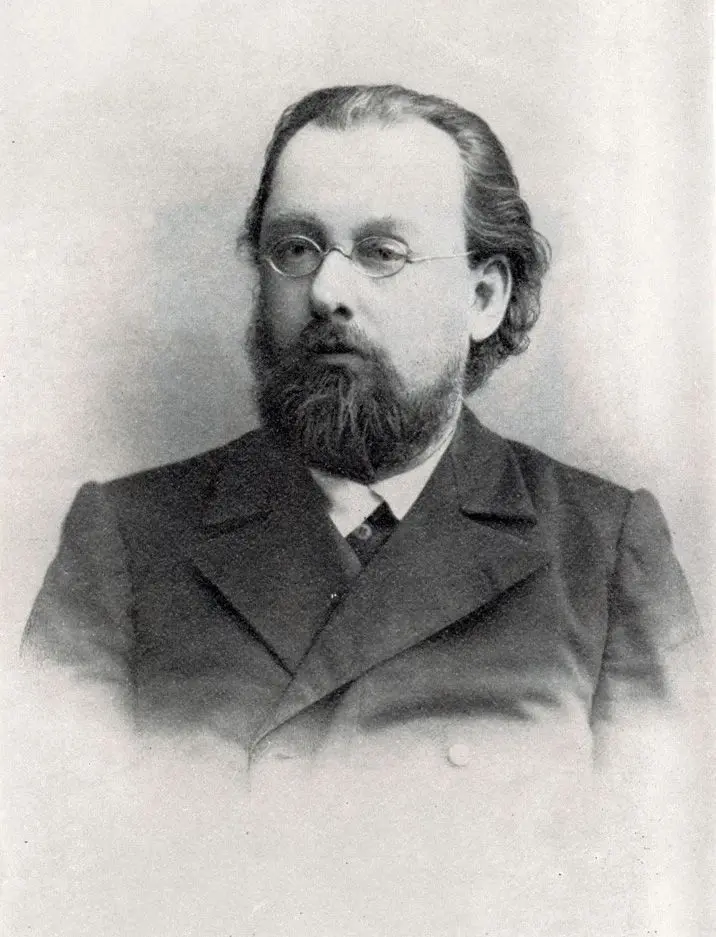
In 1903, a nearly deaf Russian schoolteacher, Konstantin Tsiolkovsky, worked out how a rocket could reach space. He wrote the famous rocket equation and suggested using liquid fuels and rockets built in stages. He used to say that Earth is the cradle of humanity, but nobody stays in the cradle forever.
The first modern rocket
In 1926, the American Robert Goddard launched the first liquid-fuel rocket from a snowy field. It flew for two and a half seconds and rose about 12 meters, a little higher than a four-story building. That doesn't sound like much, but every big rocket today is descended from that one.
Epic moment · July 21, 1969
The First Step on the Moon
This ghostly black-and-white image came live from the Moon: a television camera mounted on the side of the lunar module shows Neil Armstrong climbing down the ladder and setting foot on the lunar surface. He then said: "That's one small step for man, one giant leap for mankind." In Spain it was 3:56 in the morning, and some 600 million people were watching at the same time, the largest audience in history up to then.
Watch the full moment, with soundNASA (restauración de 2009) · Public domainThe Space Race
Next, the United States and the Soviet Union competed to see who could get there first and go farther. Those were years of record after record:
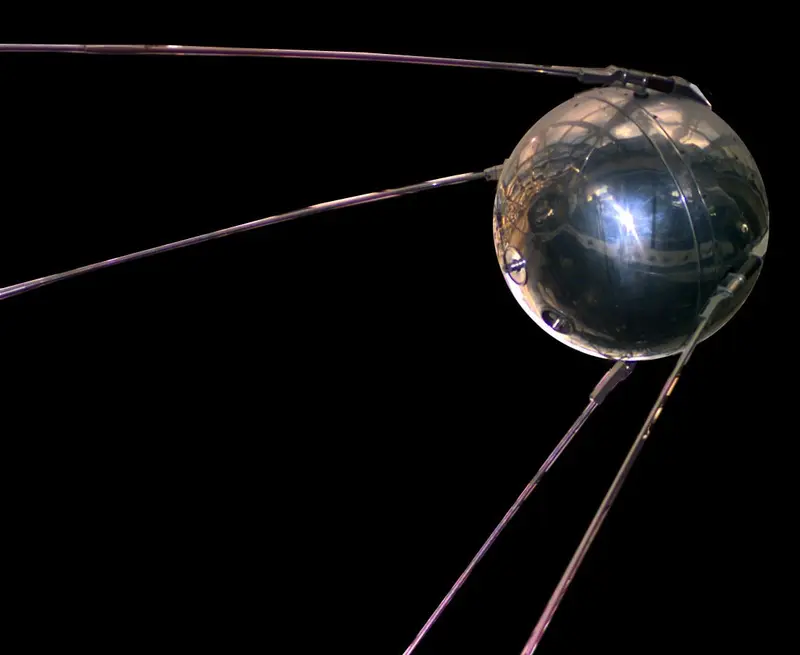
- 1957: the Soviet Union launches Sputnik, the first artificial satellite. It was a metal ball the size of a beach ball that circled the Earth every hour and a half, going "beep, beep" over the radio.
- 1961: the Soviet cosmonaut Yuri Gagarin becomes the first person in space. He made one full trip around the Earth in 108 minutes.
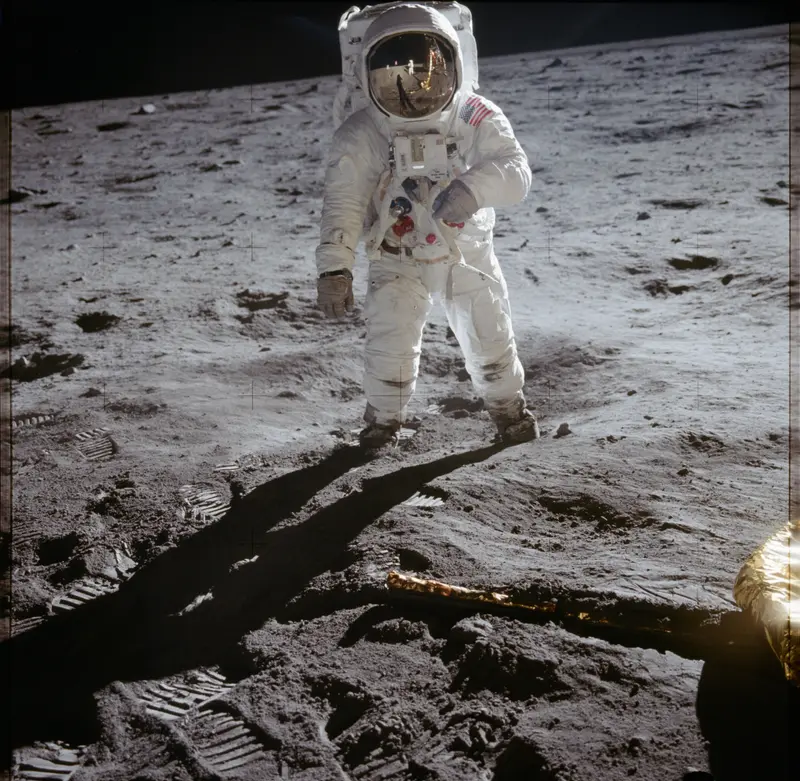
- 1969: the Americans Neil Armstrong and Buzz Aldrin walk on the Moon on the Apollo 11 mission. By 1972, twelve astronauts had walked on it.
Living in space
After the Moon came space stations, where astronauts stay for months. The biggest of all, the International Space Station, was built by many countries working together, Europe included. Since November 2000, someone has always been living on it. Find out more in how to survive in space.
Today
Today many countries, and companies too, travel to space. There are rockets that land and fly again, thousands of satellites working for us, and Artemis missions getting ready for a return to the Moon. In Spain, the Miura 1 rocket lifted off from Huelva in 2023, and a bigger one that can reach orbit is already on the way.
And the story goes on: the next chapter is in the future in space.
Key points
- 1903: Tsiolkovsky works out how to reach space with rockets.
- 1926: Goddard launches the first liquid-fuel rocket.
- 1957: Sputnik, the first satellite. 1961: Gagarin, the first person in space.
- 1969: Armstrong and Aldrin walk on the Moon.
- Since 2000, someone has always been living in space.
Test yourself
Who was the first person to travel into space?
What was Sputnik?
Since when has someone always been living on the Space Station?