The other lessons in this course explain how things are done in space today. This one explains how we got here. The basic principle of the rocket has been known for centuries, but almost all of the progress that matters happened in the last hundred years, and most of it in just the last seventy.
From gunpowder to dreams
Gunpowder rockets were invented in China around eight hundred years ago and used both for fireworks and in war. In the early 19th century the British army adopted iron-cased military rockets, designed by William Congreve, and fired them at Copenhagen in 1807. They were inaccurate and could not climb very high, but they worked on the same principle as modern rockets: expel gas backward to move forward (see how a rocket works).
The dreams came before the machines. In 1865 the French novelist Jules Verne imagined a journey to the Moon inside a projectile fired from a giant cannon. The idea could never work: the sudden acceleration of the shot would kill the passengers, and friction with the air would burn up the projectile. But the book inspired nearly everyone who, decades later, built real rockets.
Game
Newton’s cannon
The pioneers: doing the sums and lighting the first engine
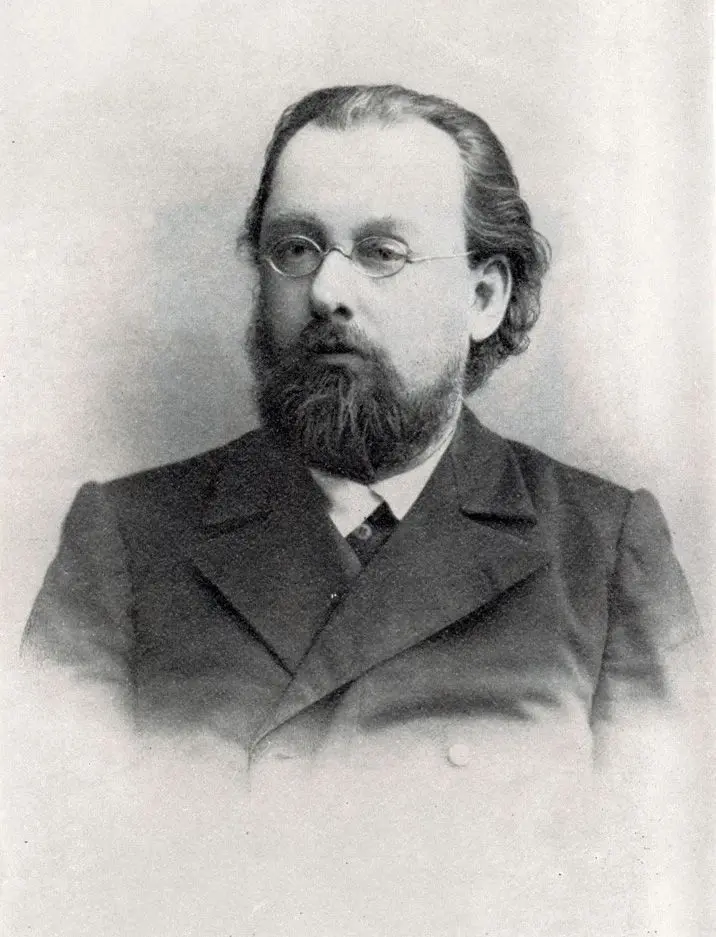
In 1903 a partially deaf Russian schoolteacher, Konstantin Tsiolkovsky, published calculations showing that it was possible to reach space with rockets, and how much fuel would be needed: the rocket equation. He also proposed using liquid oxygen and liquid hydrogen as propellants and building rockets in stages. Almost everything done in spaceflight today was already anticipated in his work.
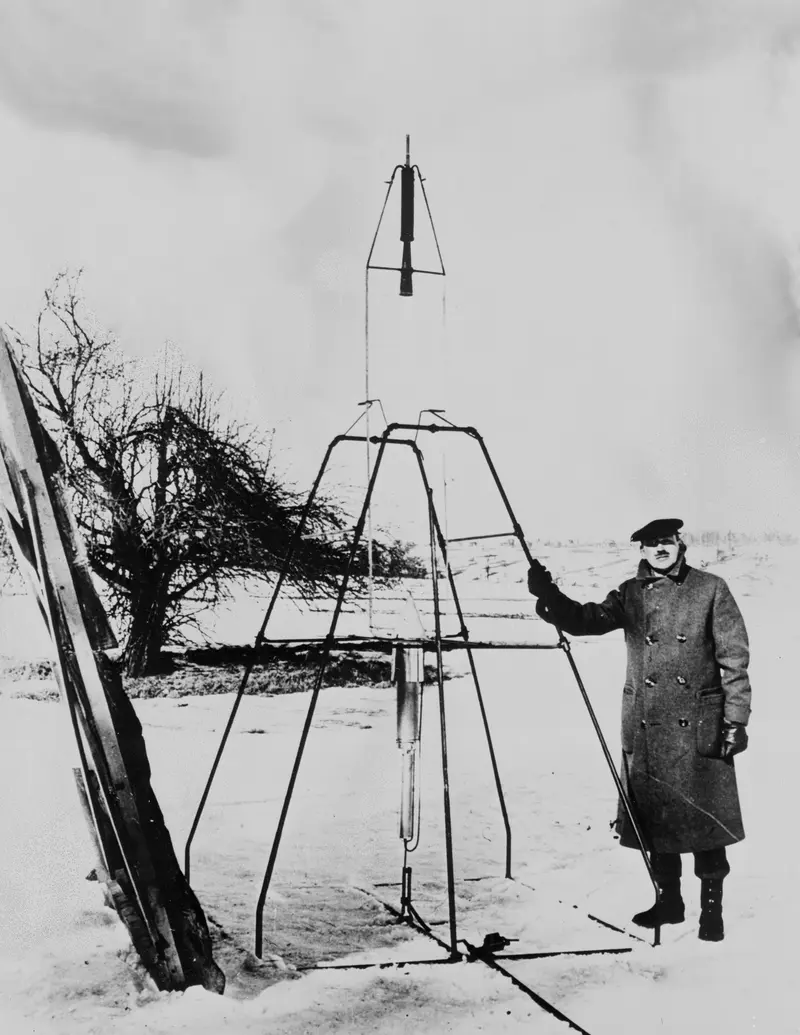
On March 16, 1926, the American physicist Robert Goddard launched the world's first liquid-fuel rocket from a snow-covered farm in Massachusetts. It burned gasoline and liquid oxygen, rose about twelve meters and flew for two and a half seconds. That may not sound like much, but it was the direct ancestor of every large rocket that followed.
In Europe, other groups of enthusiasts followed the same path. Unfortunately, the first human-made object to reach space was a weapon: a German V-2 rocket of the Second World War, in 1944. After the war, its engineers went to work for the United States and for the Soviet Union, the two great rival powers.
Epic moment · July 21, 1969
The First Step on the Moon
This ghostly black-and-white image came live from the Moon: a television camera mounted on the side of the lunar module shows Neil Armstrong climbing down the ladder and setting foot on the lunar surface. He then said: "That's one small step for man, one giant leap for mankind." In Spain it was 3:56 in the morning, and some 600 million people were watching at the same time, the largest audience in history up to then.
Watch the full moment, with soundNASA (restauración de 2009) · Public domainThe Space Race
That rivalry drove progress at extraordinary speed.
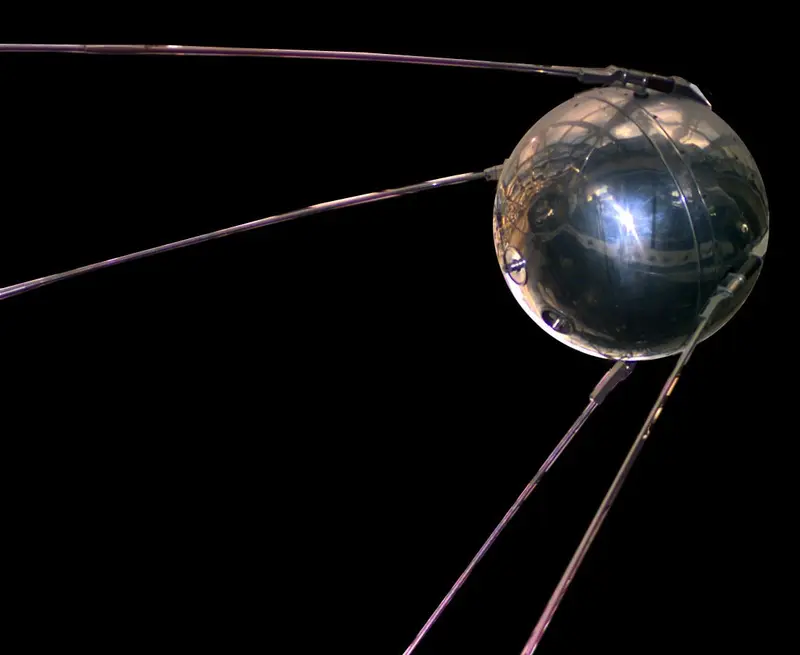
- October 4, 1957: Sputnik. The Soviet Union placed the first artificial satellite in orbit, a metal sphere 58 centimeters across, weighing about 84 kilos, that circled the Earth every hour and a half, broadcasting radio beeps that anyone with a suitable receiver could pick up. The world was astonished.
- April 12, 1961: Yuri Gagarin. A Soviet pilot became the first person in space. He completed one orbit of the Earth in a little under two hours and returned safely.
- 1963: Valentina Tereshkova became the first woman in space.
- 1965: the first spacewalk, by Alexei Leonov, tethered to his spacecraft.
- December 1968: Apollo 8. Three American astronauts became the first people to orbit the Moon, and photographed the Earth rising above its horizon.
People on the Moon
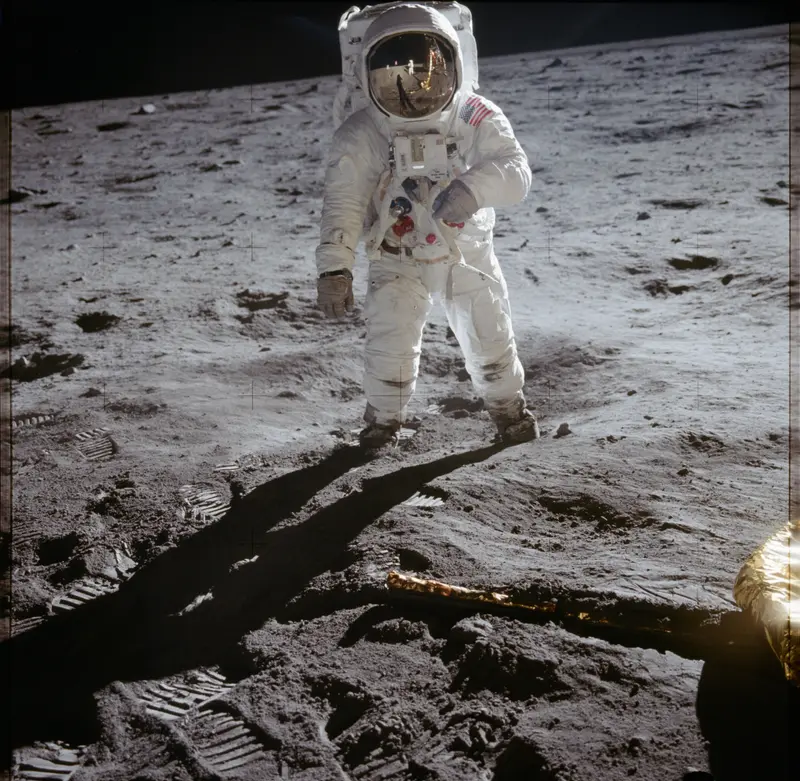
On July 20, 1969, the lunar module of Apollo 11 touched down on the Moon, and Neil Armstrong and Buzz Aldrin walked on its surface while Michael Collins waited for them in orbit. Five more missions landed by 1972: in all, twelve people have walked on the Moon. The program was then cancelled because of its enormous cost, and nobody has returned to the surface since. How the journey was made is explained in the journey to the Moon.
Living in orbit
After the Moon, the goal became to stay in space for long periods. Increasingly large space stations were built: the Soviet Salyut stations from 1971 onward, and Mir, which flew from 1986 to 2001. Between 1981 and 2011 the United States flew the Space Shuttle, a winged spacecraft that launched like a rocket and landed like a glider. In 1990 it carried the Hubble Space Telescope into orbit; Hubble's mirror turned out to be flawed, and astronauts repaired it in orbit three years later. In 1998, on one of those flights, the first Spanish astronaut, Pedro Duque, travelled into space.
Also in 1998, assembly of the International Space Station began, module by module, as a joint project of the United States, Russia, Europe, Japan and Canada. Since November 2000 there has always been someone on board. What life is like there is described in surviving in space.
Today
Over the last two decades, three major things have changed.
- Private companies. Spaceflight is no longer the exclusive domain of governments. Private companies build rockets, carry cargo and astronauts to the Station and launch thousands of satellites.
- Reusable rockets. Since 2015, the first stages of some rockets have returned and landed upright to fly again, which has made access to space much cheaper (see reaching orbit).
- More countries. China has operated its own space station since 2022; India landed a probe near the Moon's south pole in 2023; Europe, Japan and others carry out their own missions.
Europe has cooperated in space since 1975 through the European Space Agency, of which Spain is a founding member. It launches its Ariane rockets from French Guiana, in South America, close to the equator, where the Earth's rotation gives rockets a free boost of speed at liftoff. ESA builds Earth-observation and navigation satellites, probes to other planets, and the service module of the Orion capsule, which supplies air, electricity and propulsion on journeys to the Moon. In 2022 it selected a new class of astronauts, including two Spaniards, Pablo Álvarez and Sara García (the latter as a reserve).
These decades have also shown that space is unforgiving: two Space Shuttles were lost, in 1986 and 2003, with fourteen crew members in all. Each accident led to new rules, inspections and safer designs, as has happened after major disasters in aviation and at sea.
And the Moon is back on the agenda: in April 2026 the Artemis II mission carried four astronauts around it, the first crewed lunar flight since 1972. What comes next is described in the future in space.
Key points
- 1903: Tsiolkovsky works out the mathematics of space travel. 1926: Goddard launches the first liquid-fuel rocket.
- 1957: Sputnik, the first satellite. 1961: Gagarin, the first person in space.
- 1969: Apollo 11 lands on the Moon; by 1972, twelve people have walked on it.
- Since 2000, people have lived continuously on the International Space Station.
- Today: private companies, reusable rockets, new countries and the return to the Moon.
Test yourself
What did Goddard do in 1926?
What was Sputnik?
Who was the first person to travel into space?
Since when have people lived continuously on the International Space Station?