This morning, maybe someone in your home checked the weather on their phone, used the car's GPS or watched a game on TV. Without knowing it, they were using space. Thousands of satellites circle the Earth, working for us. Here you'll find out what they do, and why life today would be very different without them.
Knowing where you are: GPS
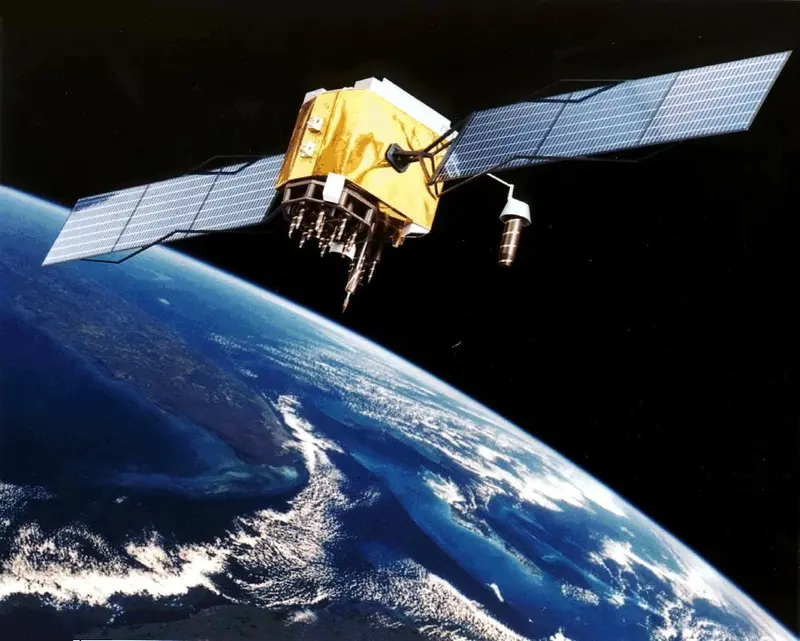
About thirty satellites in the GPS system circle the Earth about 20,000 km up. Each one carries an amazingly good clock and sends out a signal nonstop that says: "I'm satellite such-and-such, and the exact time is such-and-such."
Your phone picks up that signal and checks how long it took to arrive. Since the signal travels at the speed of light, it uses that time to work out how far away the satellite is. And with the distance to several satellites, it figures out where you are:
- With one satellite, you know you're somewhere on a circle.
- With two, the circles cross at two points.
- With three, only one point is possible: that's where you are!
In practice, a fourth satellite is used to correct the phone's clock. Besides GPS, there are other similar systems, like Europe's Galileo, and phones use several of them at once.
Game
Find yourself with GPS
Talking to the whole world
Many communications satellites are in geostationary orbit, about 36,000 km up. They go around the Earth every 24 hours, just as the Earth spins, so from the ground they seem to stand still. That's why rooftop dishes are pointed once and never moved again. We explain this in gravity and orbits.
These satellites bring TV, radio and phone calls to ships in the middle of the ocean, to airplanes and to villages that cables don't reach. And more and more satellites in low orbit are bringing the internet to every corner of the planet.
Epic moment · 2017
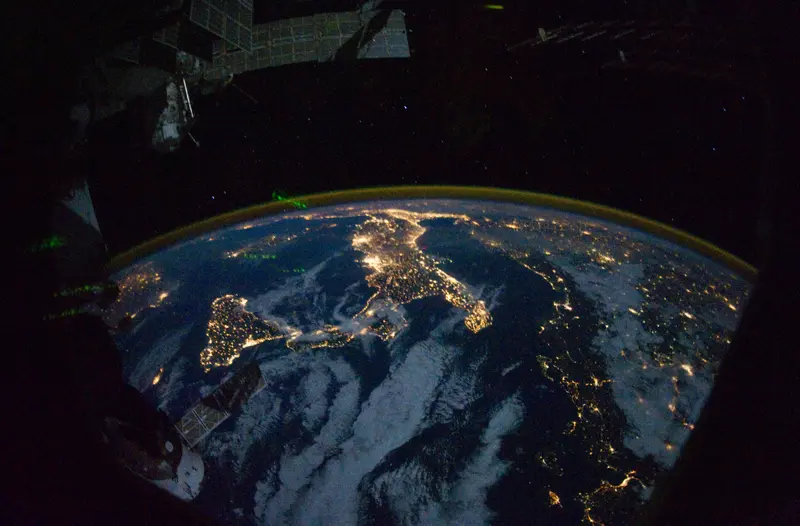
Earth at Night from the Space Station
A green and violet aurora borealis ripples over Canada while, below, the lights of cities across the United States switch on all the way down to Florida. They are hundreds of photos that the Expedition 53 astronauts took one after another from the Space Station, about 400 kilometers up. The Station moves so fast, about 28,000 km/h (17,500 mph), that it circles the world every hour and a half and its crew sees 16 sunrises a day.
Watch the full momentNASA (Crew Earth Observations, Johnson Space Center) · Public domainTomorrow's weather
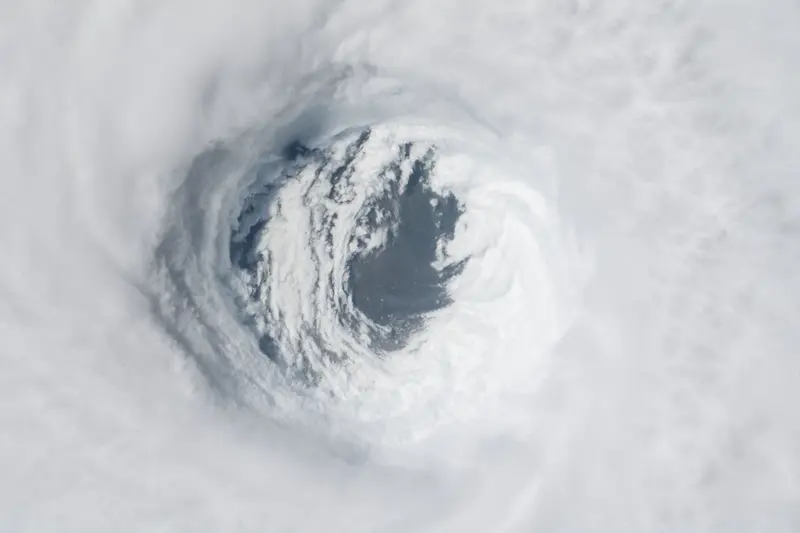
The TV weather forecast wouldn't be possible without weather satellites. From up high they watch the clouds, measure the temperature of the air and the sea, and track storms. Europe has its own, the Meteosat satellites, which keep a constant eye on Europe's side of the planet.
Thanks to them, people can be warned about a hurricane days before it reaches the coast, and that saves a huge number of lives.
Looking after the planet from above
Other satellites take pictures of the Earth to help look after it. They're used to:
- See where there's a wildfire and which way the smoke is moving.
- Measure how much ice there is at the poles and how much the sea level is rising.
- Make quick maps after a flood or an earthquake, so help can be sent.
Europe has a big program for this, Copernicus, with satellites that photograph the whole planet every few days.
Science and inventions that came home
From space, we also look outward. Telescopes like the James Webb see galaxies so far away that their light set off more than 13 billion years ago.
And many inventions designed for space ended up in our homes:
- The sensor in phone cameras was born in a NASA lab that was looking for small, light cameras.
- The memory foam in some mattresses and pillows was invented at a NASA center to make airplane seats protect people better in a crash.
- Ear thermometers use a technique that was used to measure the heat of stars.
So what comes next? Carry on with the future in space.
Key points
- GPS works out where you are by measuring the distance to several satellites.
- Geostationary satellites seem to stand still and bring TV and phone calls everywhere.
- Weather satellites make it possible to forecast the weather and warn about hurricanes.
- Inventions like the phone camera come from space research.
Test yourself
What's the smallest number of distances to satellites you need to know where you are on a map?
Why do satellite TV dishes always point at the same spot?
Which of these inventions came out of space research?