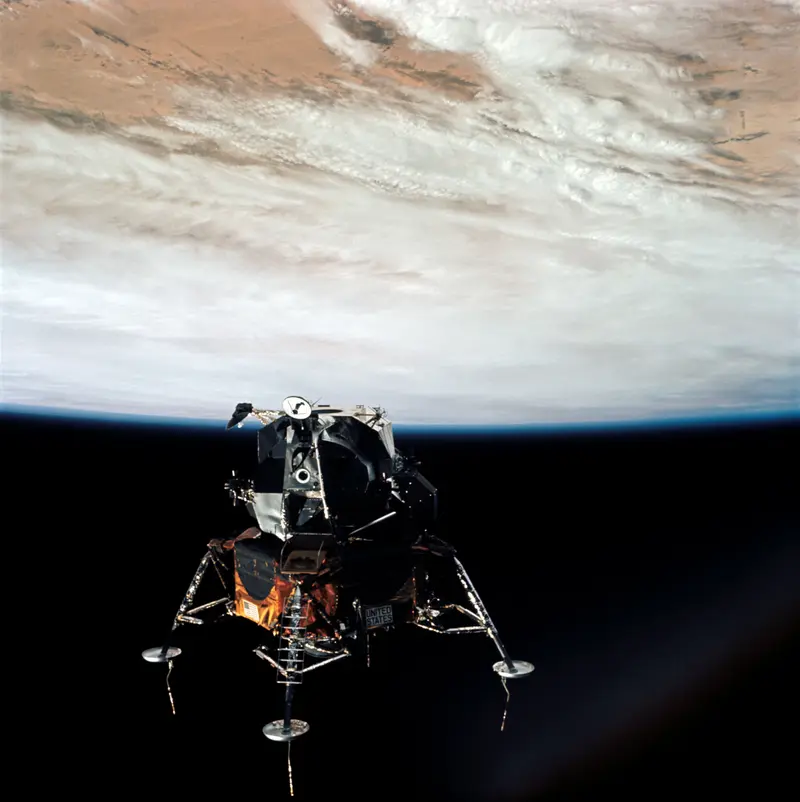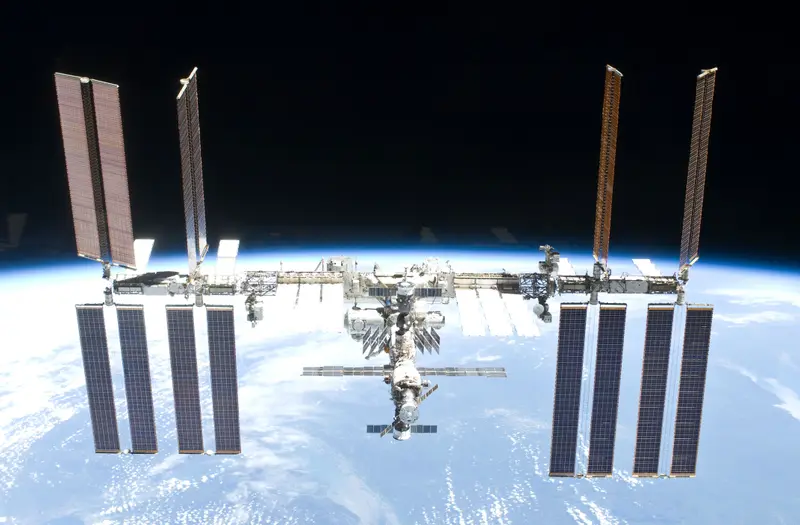
Drop a pencil and it falls. Every time. It never floats up or just hangs in the air. Yet the Space Station, which weighs about as much as 300 cars, has been up there for more than twenty years without falling down. How is that possible? The answer is surprising: it is falling. All the time. Here you'll find out how something can fall without ever reaching the ground.
What is gravity?
Gravity is the force that pulls things toward each other. Everything pulls on everything else: you pull on your pencil, and your pencil pulls on you. But that force is so weak that we only notice it when something is enormous, like a planet. The Earth is so big that it pulls everything toward its center: that's why things fall and why we don't go flying off.
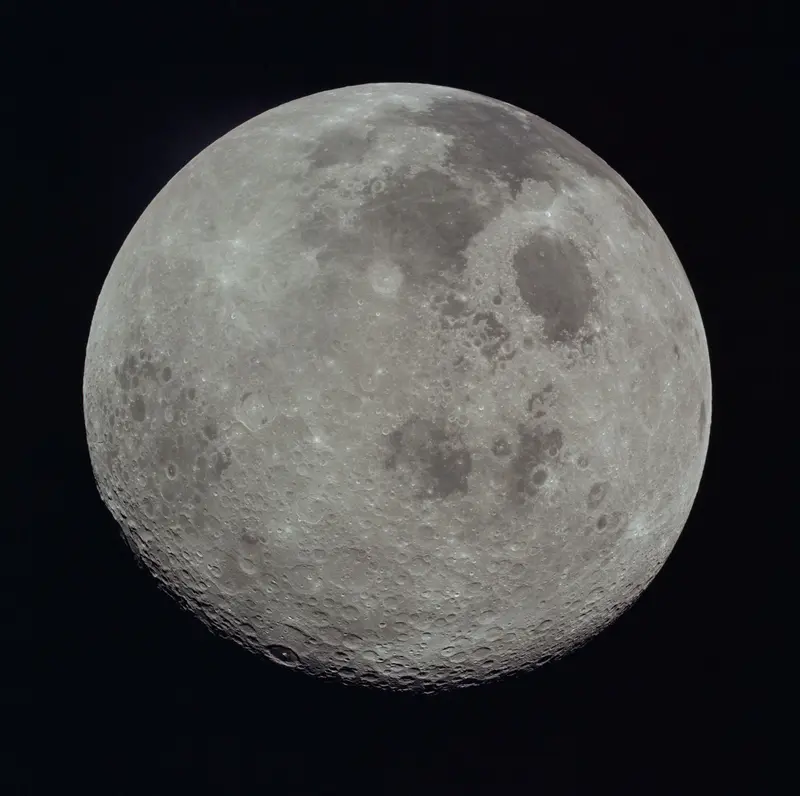
The bigger a planet or moon is, the stronger it pulls. The Moon is much smaller than the Earth, so there you'd weigh about six times less. You could jump over a person's head!
Game
How much would you weigh on other worlds?
Newton's cannonball
More than 300 years ago, the scientist Isaac Newton imagined an experiment. Put a cannon on top of a super-tall mountain, above the air, and fire it straight ahead.
- If the cannonball comes out slowly, it lands close by.
- If it comes out faster, it lands farther away.
- And if it comes out incredibly fast, then while it falls, the Earth (which is round) curves away underneath it. The cannonball falls and falls, but the ground keeps slipping away from it. It goes all the way around the planet and comes back from behind.
That's an orbit: falling without ever reaching the ground.
Game
Newton’s cannon
How fast? About 28,000 kilometers per hour (17,500 mph): from London to Edinburgh in just over a minute. That's how fast the Space Station goes, and it travels around the Earth in about 90 minutes. Its astronauts see about 16 sunrises a day. Reaching that speed is the hard part of going to space, as you'll see in getting to orbit.
Epic moment · August 2, 1971
The Hammer and the Feather
On the Moon, Apollo 15 commander David Scott holds a hammer in one hand and a falcon feather in the other, and drops them at the same time. With no air to slow the feather, both fall at exactly the same rate and hit the ground together. It is live proof of what Galileo had guessed almost four centuries earlier: gravity accelerates all objects equally, whatever they weigh.
Watch the full moment, with soundNASA · Public domainWhy do astronauts float?
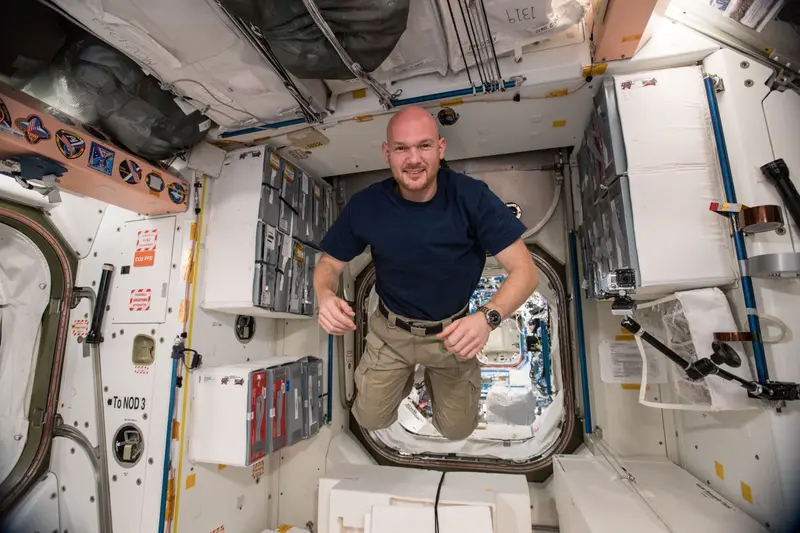
Lots of people think there's no gravity on the Space Station. But there is! At 400 km up, the Earth pulls almost as hard as it does down here: nine-tenths as much.
Astronauts float because they're falling, just like the station. Imagine you're in an elevator and the cable snaps: you, the elevator and your backpack all fall together, and during that fall you'd float inside. On the station the same thing happens, except the fall never ends, because it's an orbit. This is called weightlessness.
Low orbits and high orbits
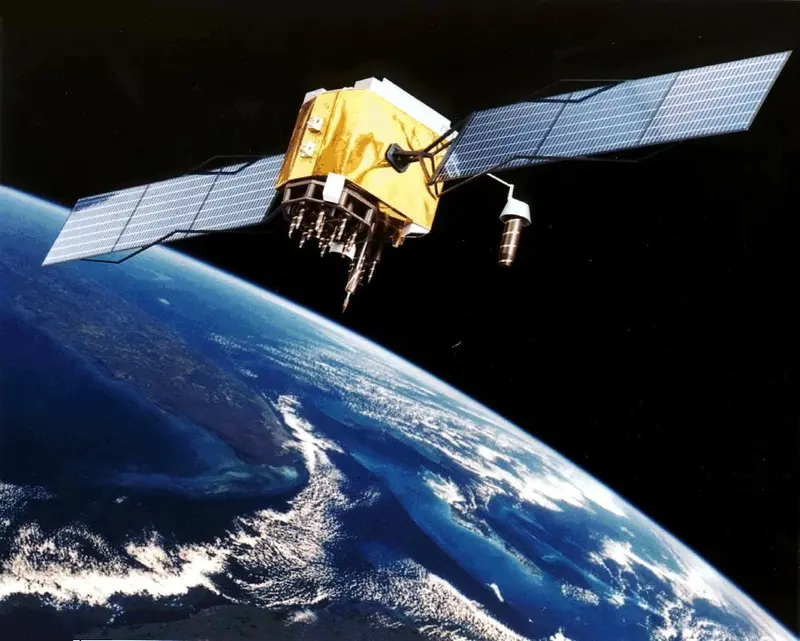
Not all satellites are at the same height:
- Low Earth orbit (from about 200 to 2,000 km): very close and very fast. That's where the Space Station is, along with many satellites that take photos of the Earth.
- Geostationary orbit (about 36,000 km): so far out that the satellite takes exactly one day to go around, the same time the Earth takes to spin. From the ground it seems to stand still in the sky. That's why satellite TV dishes on rooftops always point at the same spot. You'll see more in what space is good for.
The farther away a satellite is, the slower it goes and the longer it takes to go around.
Key points
- Gravity makes things pull on each other; the Earth pulls everything toward its center.
- An orbit is falling without ever touching the ground, because you're going so fast that the Earth curves away beneath you.
- Astronauts float because they're falling along with their spacecraft, not because there's no gravity.
- The higher the orbit, the slower you go around. At 36,000 km, a satellite seems to stand still.
Test yourself
Why do astronauts float on the Space Station?
How long does the Space Station take to go once around the Earth?
What's special about a geostationary satellite?