Reaching 100 kilometers up, where space begins, isn't all that hard: some small rockets do it in a few minutes and then fall straight back down. The really hard part is staying up there. And after that, getting back home without turning into a shooting star. Here you'll see how both are done.
The magic speed: 28,000 km/h
Remember Newton's cannonball: to be in orbit, you have to go so fast sideways that, while you fall, the Earth curves away beneath you. In low orbit, that means about 7.8 kilometers every second, or about 28,000 km/h.
Is that a lot? A huge amount. At that speed you'd get from London to Edinburgh in just over a minute. It's between eight and ten times faster than a rifle bullet.
So a rocket's job isn't so much going up as speeding up sideways. Almost all of its fuel is used for that.
First up, then sideways
If you watch a launch closely, you'll see the rocket go straight up and then, soon after, start to tilt, until it ends up flying almost on its side. There's a good reason for that:
- Up first. Near the ground the air is thick and slows you down a lot. Going really fast down there would be like trying to run in a swimming pool. So the rocket climbs first to get out of the thickest part of the atmosphere.
- Then sideways. Once it's high up, where there's hardly any air left, it tips over and speeds toward the horizon until it reaches 28,000 km/h.
Adding up everything that's lost fighting the air and gravity, a rocket has to gain about 9 kilometers per second in total. Engineers call this the speed budget, as if it were the money you have to spend on the trip. To get there, rockets use stages.
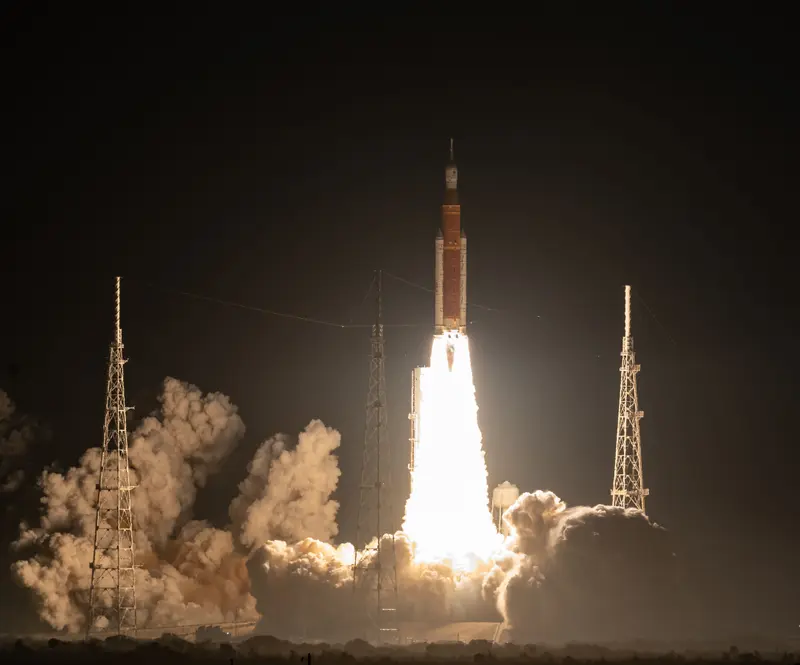
Epic moment · November 16, 2022
Artemis I Launch
At 1:47 a.m. Eastern Time (7:47 a.m. in Spain), in the dead of night in Florida, the SLS rocket ignites its four engines and its two side boosters and turns darkness into day. With about 39 million newtons of thrust, it was then the most powerful rocket ever launched. It carried the uncrewed Orion capsule on a 25-and-a-half-day trip around the Moon: the dress rehearsal for sending people back there.
Watch the full moment, with soundNASA · Public domainComing back: the hottest part
To come down, the spacecraft fires its engines forward for a moment to slow down a little. Then it starts to fall and plunges into the atmosphere at almost 28,000 km/h. That's when reentry begins.
The air in front of the spacecraft has no time to get out of the way: it gets squeezed enormously and heats up to more than 1,500°C, hotter than the lava from a volcano. The spacecraft is wrapped in a fiery glow. To keep from burning up, it carries a heat shield: a special layer that withstands the heat and stops it from getting inside. You can read how they're made in materials for space.
Game
The heat shield
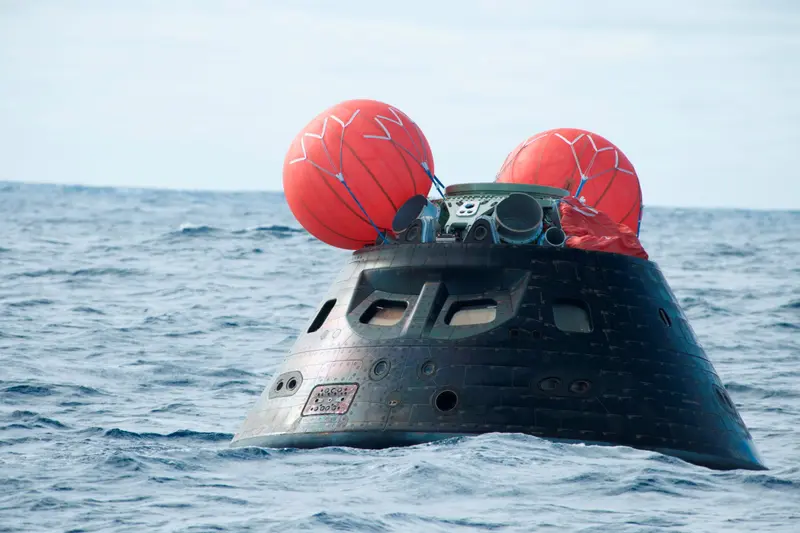
Finally, once the air has slowed it down enough, the parachutes open and the capsule drifts gently down into the sea or onto land.
Rockets that come back
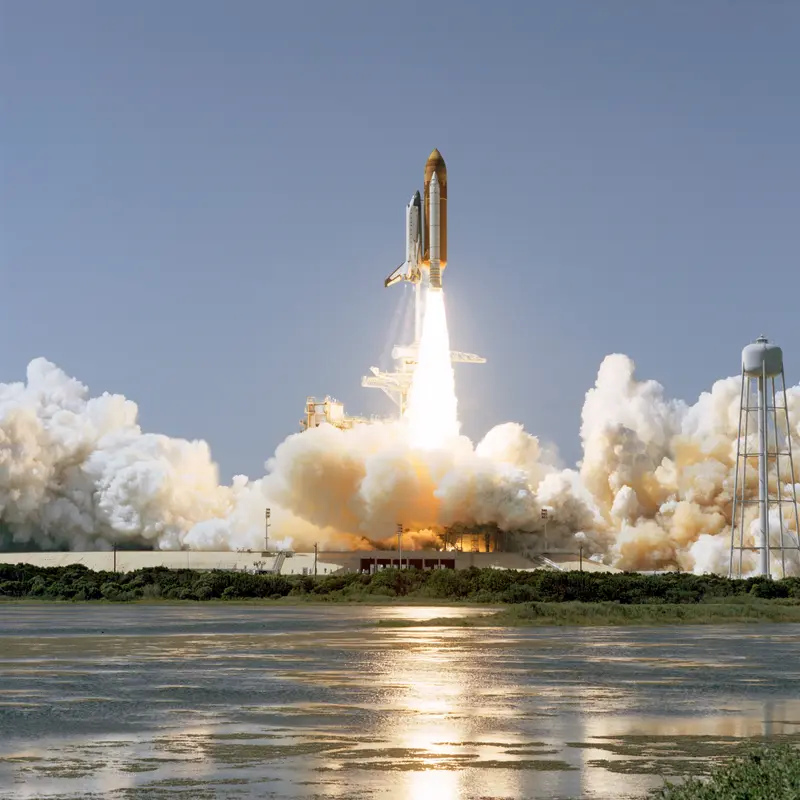
For many years, every rocket was used only once: it was like throwing an airplane in the trash after every flight. Today, some rockets do something amazing: after it separates, their first stage turns around, fires its engines to slow down and lands standing up on a set of legs, either on land or on a ship in the middle of the ocean. Some have already flown more than twenty times.
Reusing rockets makes going to space cheaper, and that opens the door to lots of new missions. You can see which ones in the future in space.
Key points
- To stay in orbit you have to go about 28,000 km/h, almost all of it sideways.
- Rockets climb first to get out of the thick air, and then they tilt over.
- On the way back, the spacecraft squashes the air and heats up to more than 1,500°C: the heat shield protects it.
- Some rockets now land and fly again, and that makes trips cheaper.
Test yourself
How fast does a spacecraft have to go to stay in low orbit?
Why do rockets tilt over soon after liftoff?
What makes a spacecraft get so hot when it comes back to Earth?
More to practise
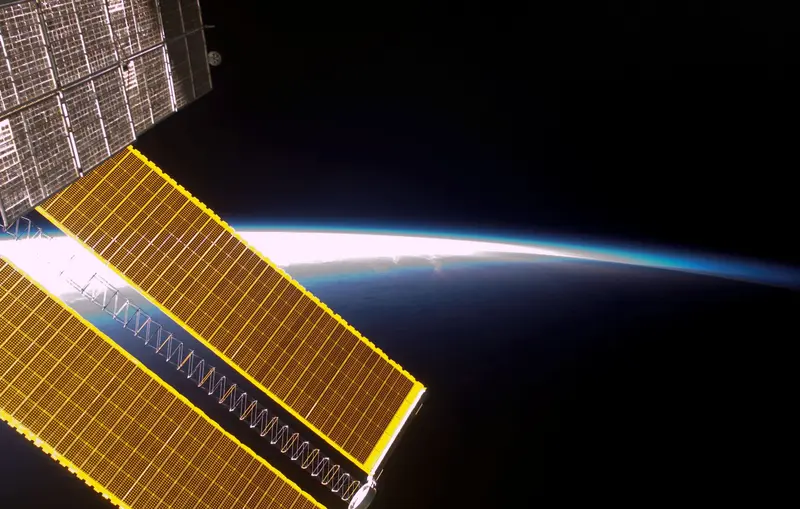 GameClimb through the atmosphereRise from the ground to 1,000 km: clouds, airliners, balloons, the Kármán line, the auroras and the Space Station.
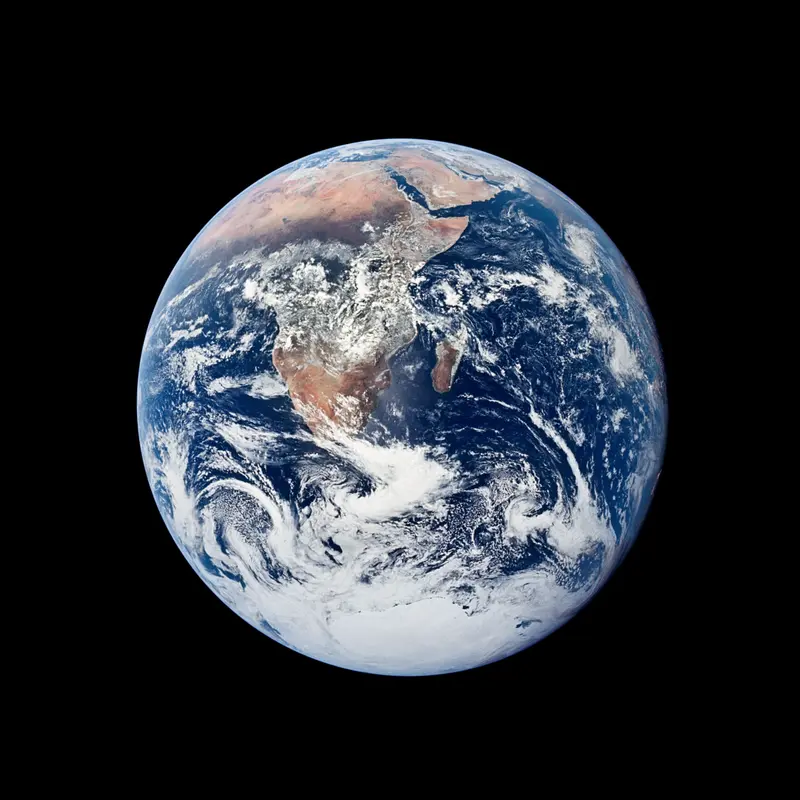 GameNewton’s cannonFire a cannonball from an impossibly tall mountain at the speed you choose: does it fall, circle the Earth or escape forever?
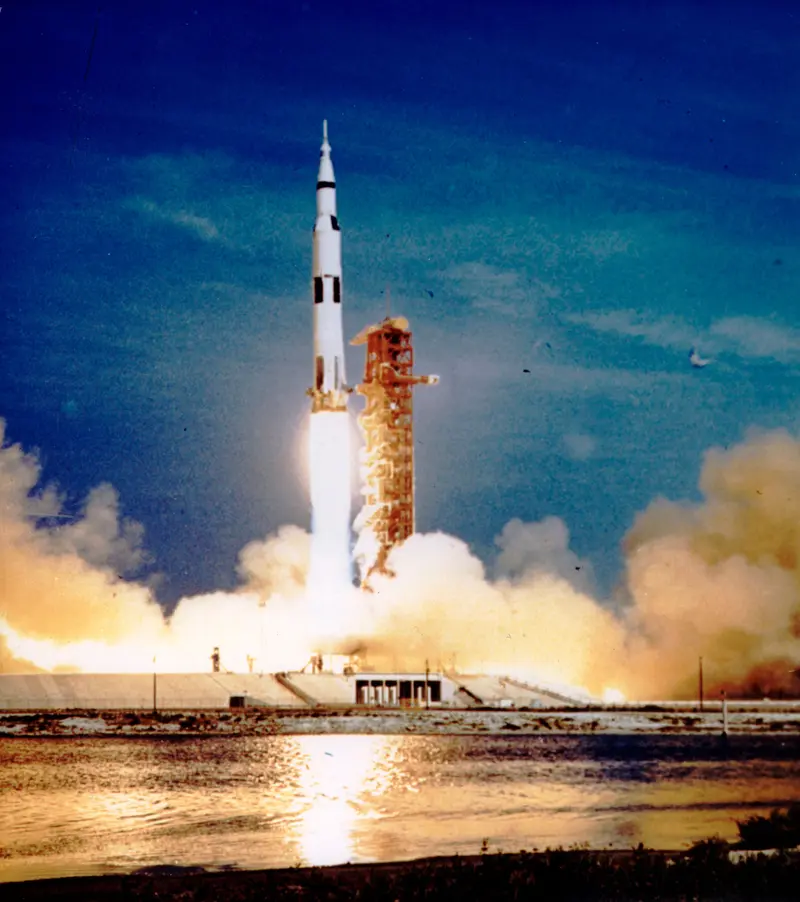 GameDesign your rocketChoose the propellant, the stages and the payload, and see whether your rocket reaches orbit or the Moon. The rocket equation in action.