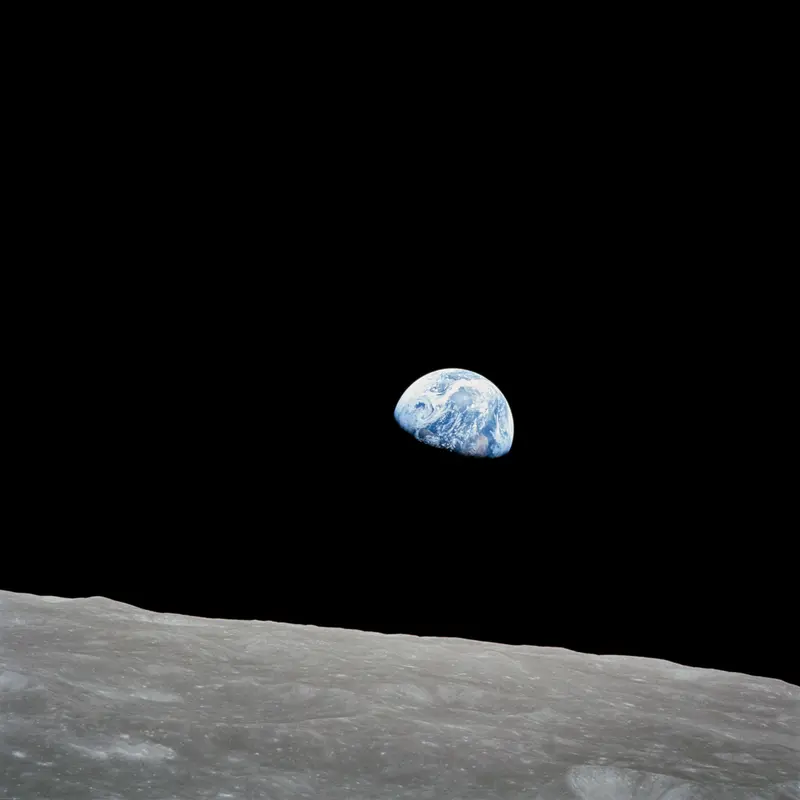
The Moon is the only place beyond Earth where people have ever set foot. From there, our planet looks like a blue marble hanging in the darkness. Getting there is like a test of everything you need to know about space travel: giant rockets, orbits, braking, landings, and a high-speed trip back home.
How far away it is
The Moon is about 384,400 kilometers away. About 30 Earths in a row would fit between us and it. If you could drive there at 100 km/h (about 60 mph) without ever stopping, it would take you more than five months. A spacecraft with astronauts takes about three days.
Even light, the fastest thing there is, takes a little over a second to get there. That's why, when astronauts talk to Earth by radio, there's a short silence before every answer.
The route: aiming at the future
First, a big rocket puts the spacecraft into orbit around the Earth. Then, at just the right moment, it fires its engine again and speeds up to about 40,000 km/h. That's enough to break out of orbit and head off toward the Moon.
But there's a catch: the Moon doesn't stay still. It travels around the Earth, and in three days it covers a good chunk of its path. So the spacecraft doesn't aim at where the Moon is, but at where it will be when it arrives.
When it arrives, the spacecraft is going too fast and would fly right past. So it fires its engine forward to brake and settle into circling the Moon: it enters lunar orbit.
Epic moment · July 20, 1969
The Eagle's Moon Landing
This is the film that a 16 mm camera recorded through Buzz Aldrin's window as the Eagle lunar module descended toward the Sea of Tranquility. The computer alarms kept sounding and the planned spot was full of rocks, so Neil Armstrong took the controls and searched by hand for a flat place. At the end you can see the lunar dust swept up by the engine and the shadow of one of the leg probes: they touched the Moon with fuel for less than a minute.
Watch the full moment, with soundNASA · Public domainLanding on the Moon: no air, no parachutes
Now it's time to go down to the surface. On Earth, capsules use the air to slow down and then parachutes. But the Moon has no air, so those are useless. The only way to brake is with the engine, pointing down, going slower and slower until you touch the ground gently.
It's very tricky: come down too fast and you crash; go too slowly and you run out of fuel before you get there.
Game
Land the lunar module
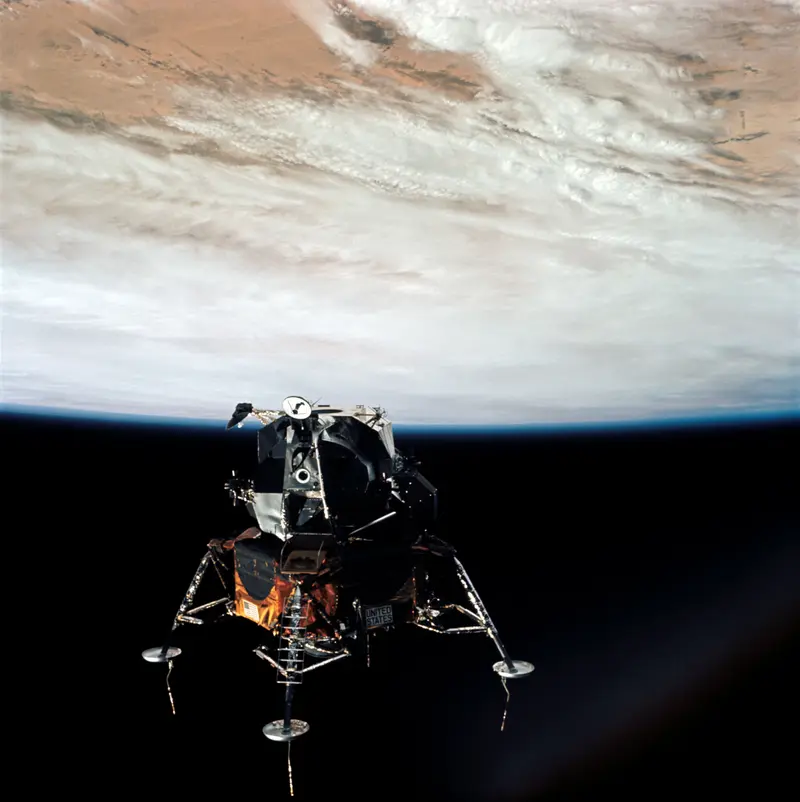
On the Moon, gravity is six times weaker than on Earth. Astronauts move around in little hops, like kangaroos in slow motion. We explain why in gravity and orbits.
Coming home
To come back, the spacecraft fires its engine to escape from the Moon and sets off on another three-day trip. It reaches Earth at about 40,000 km/h, almost one and a half times faster than a spacecraft returning from the Space Station, and plunges into the air wrapped in fire. Its heat shield has to handle even more heat. Finally the parachutes open and the capsule splashes down in the sea.
Then and now: Apollo and Artemis
Between 1969 and 1972, the Apollo missions took twelve astronauts to walk on the Moon. Since there's no wind or rain there, their footprints are still there, untouched.
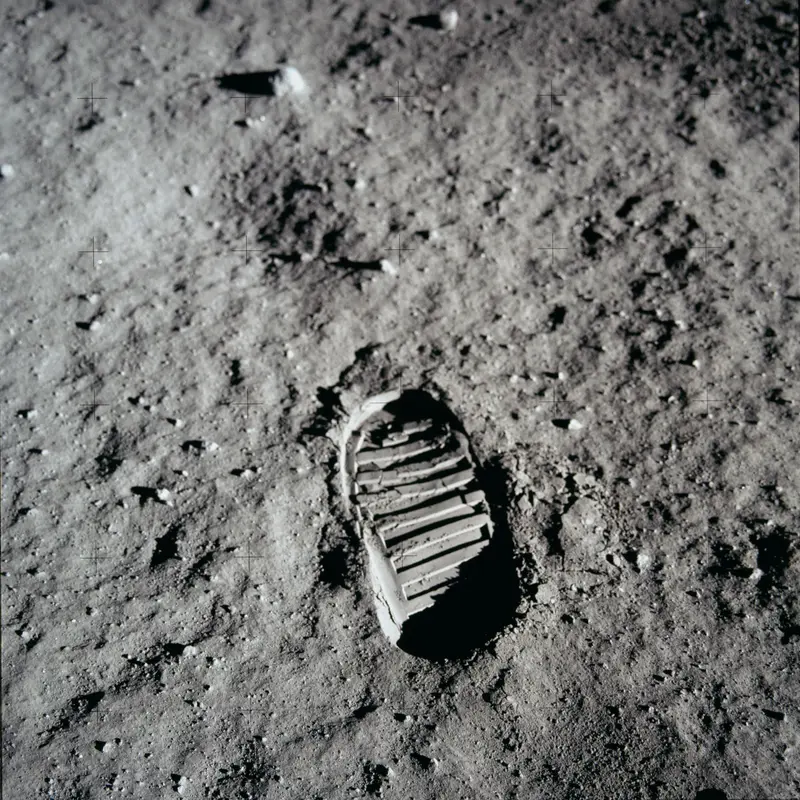
Today the Moon is in the spotlight again, thanks to the Artemis missions. In 2022, Artemis I flew around the Moon with no crew, and in 2026 Artemis II took four astronauts around it. The next missions aim to land astronauts near the Moon's south pole, where there's ice hidden in craters that never see the Sun. That ice could provide water to drink, oxygen to breathe and fuel for rockets. Find out more in the future in space.
Key points
- The Moon is 384,400 km away: about three days of travel.
- You have to aim at where the Moon will be, not where it is.
- On arrival you brake to enter lunar orbit; to land, only the engine will do, because there's no air.
- The Artemis missions aim to walk on the Moon again, near its south pole.
Test yourself
Roughly how long does a spacecraft take to reach the Moon?
Why can't you use parachutes to land on the Moon?
Where does a spacecraft aim when it heads off to the Moon?
More to practise
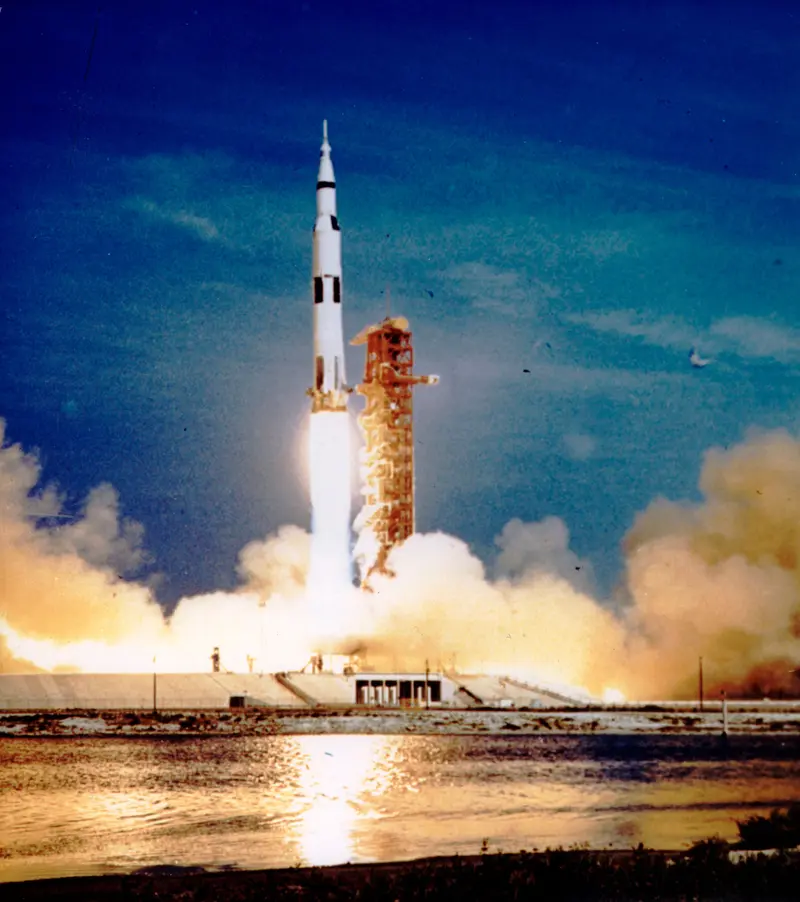 GameDesign your rocketChoose the propellant, the stages and the payload, and see whether your rocket reaches orbit or the Moon. The rocket equation in action.
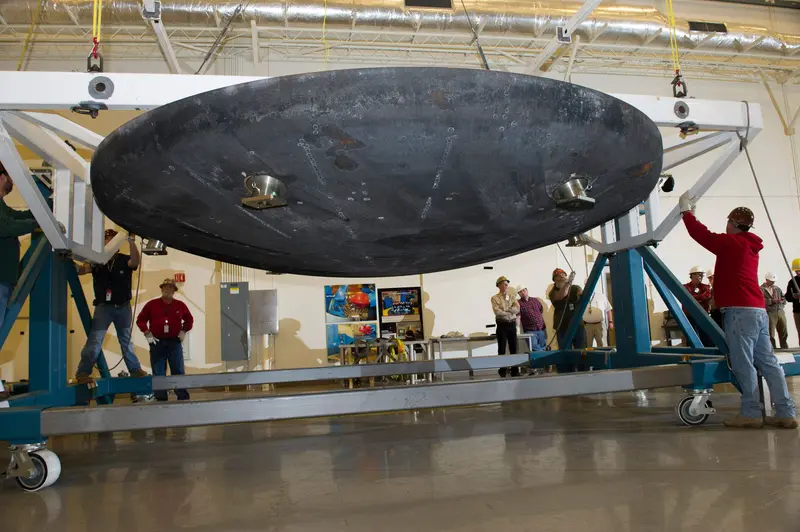 GameThe heat shieldChoose the material and thickness of the heat shield of a capsule coming home at 8 km/s, or from the Moon at 11 km/s. Does it survive?