Building a spacecraft is like making a backpack that has to weigh almost nothing, survive an oven and a freezer at the same time, not break when a rocket shakes it, and not wear out in a vacuum for years. That's why engineers pick the perfect material for every single part.
Enemy number one: weight
Remember that a rocket is almost all fuel. Every kilo you want to send into space needs a lot more fuel, and costs thousands of dollars. So engineers fight over every gram. Their favorite materials are the ones that are light and strong at the same time:
- Aluminum mixed with lithium: aluminum is already light (it's what soda cans are made of). Mixed with a little lithium, the lightest metal there is, it becomes even lighter and stronger. Big rocket tanks are made from it.
- Titanium: as strong as steel, but much lighter, and it handles heat well. It's used in engine parts and important bolts.
- Carbon fiber: super-thin threads of carbon glued together with a kind of hard glue. It's lighter than aluminum and tougher. It's the same material used in the most expensive tennis rackets and racing bikes.
Hot and cold at the same time
In space there's no air to spread heat around. The side of a spacecraft facing the Sun can get hotter than 100°C, while the side in the shade drops below −100°C. And in low orbit, it switches from one to the other every hour and a half.
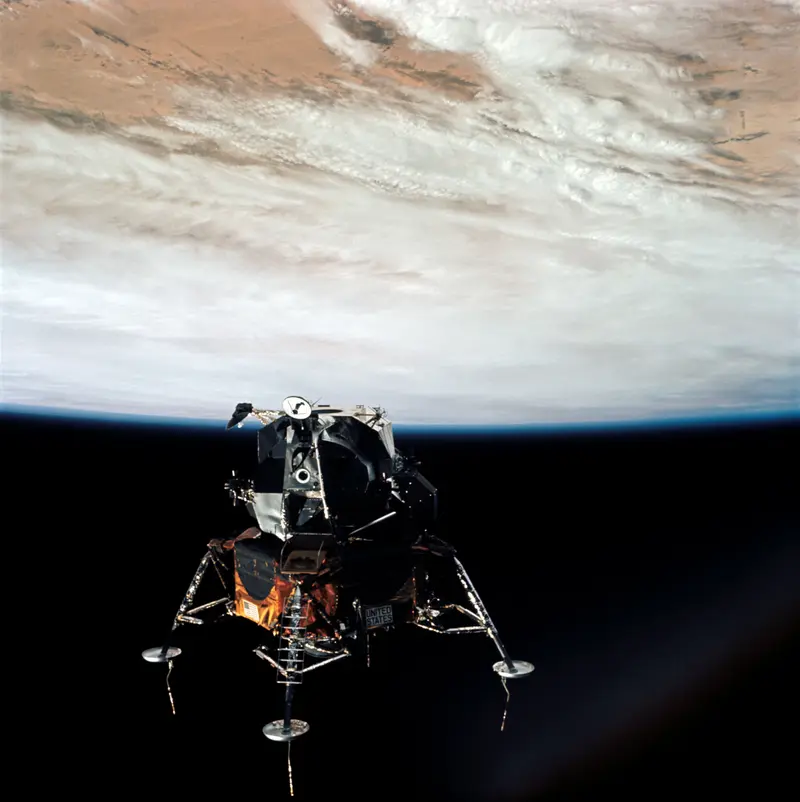
To protect themselves, many spacecraft are wrapped in gold or silver blankets. They aren't a single sheet but many super-thin layers, like the pages of a book, with a little vacuum between them. Each layer reflects heat, and the next one blocks it again. It's the same idea as the silver emergency blankets you find in first-aid kits.
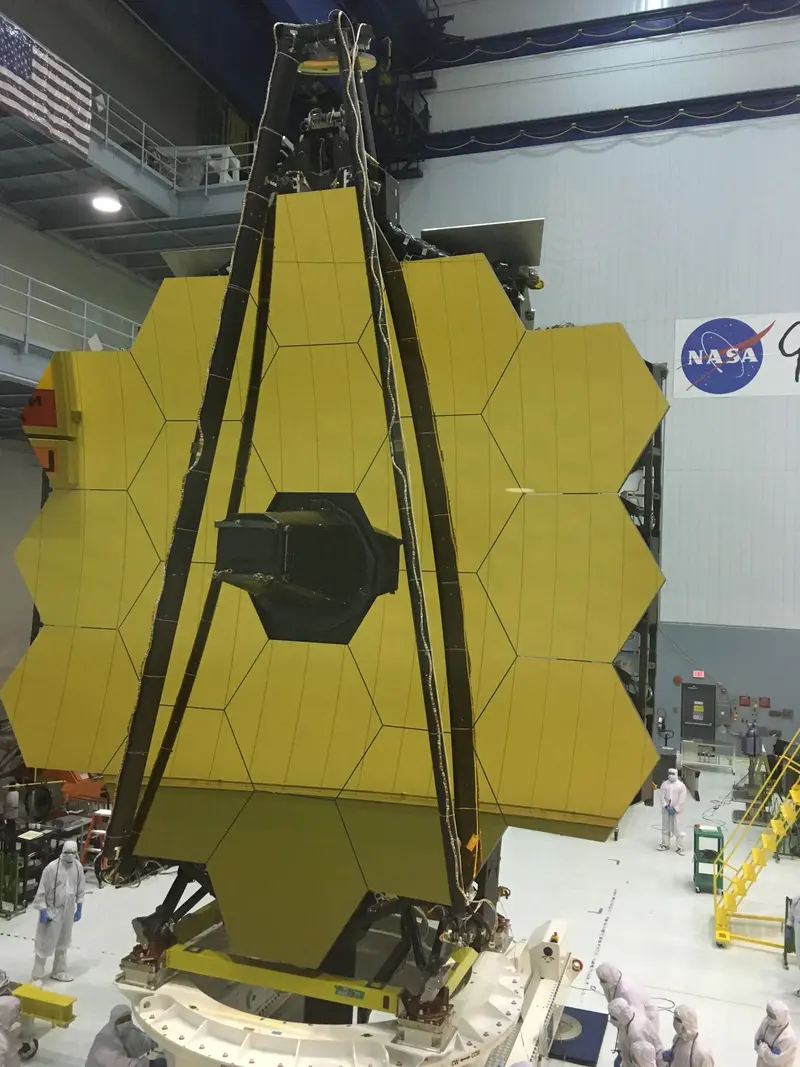
The James Webb Space Telescope has the most spectacular shield of all: a five-layer sunshade the size of a tennis court. On the Sun side it's more than 80°C; on the shady side, colder than −200°C.
Epic moment · April 10, 2026
Coming Home from the Moon: Artemis II Reentry
A camera attached to the pilot's window of the Orion capsule records the return of the four Artemis II astronauts after looping around the Moon. The spacecraft enters the atmosphere at almost 40,000 km/h (25,000 mph) and the air, compressed in front of the heat shield, becomes a glowing plasma at about 2,700 °C: that is why the window turns pink and orange and sparks of burning material fly off. Minutes later the red and white parachutes open, slowing the capsule until it settles gently in the Pacific Ocean.
Watch the full moment, with soundNASA · Public domainHeat shields: standing up to fire
The toughest part comes on the way home. A spacecraft entering the atmosphere heats up to more than 1,500°C. There are two ways to survive it:
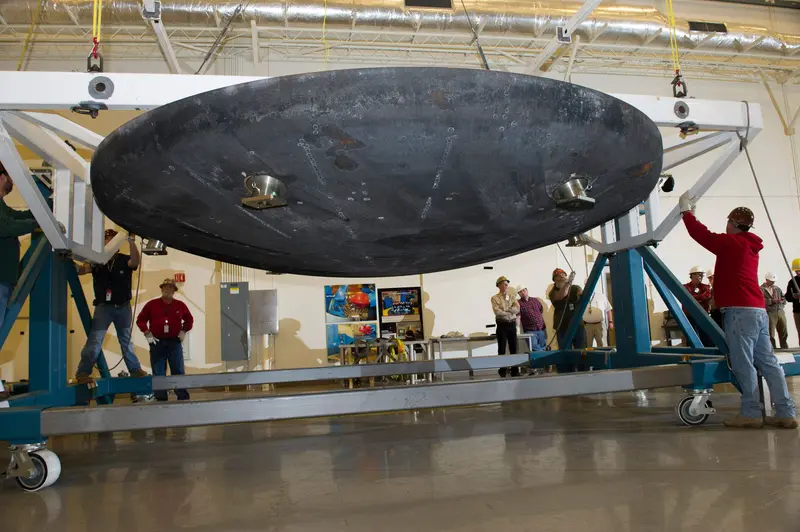
- Ablative shields. Their outer layer slowly burns and flakes away, and as it goes it carries the heat off with it. It's a bit like what sweat does: as it evaporates from your skin, it cools you down. They're used on capsules like Orion, and they only work for one trip.
- Reusable tiles. The Space Shuttle was covered in thousands of tiles made almost entirely of sand (silica) with tons of air inside. They let so little heat through that you could pick one up by its edges with your bare hand soon after taking it red-hot out of an oven.
Game
The heat shield
Vacuum and radiation attack too
Space has some quieter dangers as well:
- Cold welding. On Earth, metals always have a super-thin layer of air and dirt on them. In a vacuum, two very clean pieces of metal that touch can stick together forever.
- Radiation. Particles from the Sun slowly damage plastics and computers.
- Specks that fly like bullets. Tiny grains of dust and bits of space junk travel faster than a bullet. To stop them, the Space Station has layers with gaps between them: the first one smashes the speck into tiny pieces and the next ones stop them.
Key points
- In space, every gram counts: engineers use light, strong materials like aluminum-lithium, titanium and carbon fiber.
- Multi-layer blankets protect against the Sun's heat and the cold of the shade.
- Heat shields survive the trip home: some burn away bit by bit, and others, like tiles, can be reused.
Test yourself
Why do a spacecraft's materials have to be very light?
What does an ablative heat shield do?
What are the gold or silver blankets wrapped around many spacecraft for?